
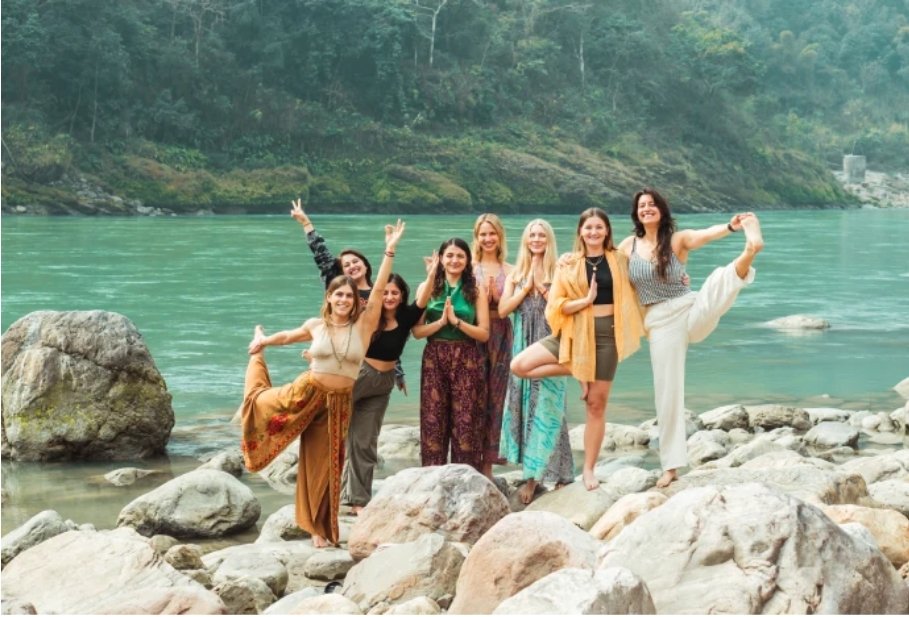
Yoga, one of the oldest spiritual discipline for mind-body and health, and spiritual growth. For some people, yoga is not merey a form of keep-fit but a way of life that is based on connecting with the soul and bringing spiritual enlightenment. If getting yourself certified as a yoga teacher is what’s been on your mind, you can consider traveling to India – the place where yoga was born and which offers many options for you to take up this transformative journey.
Deciding on the best Yoga Teacher Training in India for you can seem overwhelming though – with so many different training studios, centres and styles on offer. Whether you are attracted to the peace and serenity of the Himalayas or the vibrant activity in Rishikesh, the one-month experience will depend on the type of program you decide upon. In this guide/blog, we will help you figure out how do you pick the best YTT program in India that fits your body, mind and spirits and that will tide along with your goals, values, and mission.
1. Understand Your Yoga Style Preferences
The primary part of choosing the perfect yoga teacher training is to identify the type of yoga you want to teach and practise. India has many Yoga schools which teaches Yoga in different way and orientation. Some popular styles include:
Hatha Yoga: Concentrates on physical postures (asanas) and exercise (pranayama) and to some extent meditation. Great for beginners and anyone wanting to establish a balanced and serene practice.
Vinyasa Yoga: An active form of yoga where breath is synchronized with movement. It is a more energetic system of yoga that smoothly links poses to the next.
Ashtanga Yoga: A demanding fast-paced style with set series of poses. They are known for discipline and consistency.
Kundalini Yoga: A focus on unlocking energy in the body with the use of meditation, chanting, and breath work.
Iyengar Yoga: A technique that uses props such as blocks, straps and chairs in order to achieve proper alignment. Perfect tool for people with injuries and focusing tight on the knotted muscles.
Sivananda Yoga: The form of this type of yoga is a traditional one which seeks unity in the full yogic approach which incorporate the five points of yoga that include proper exercise, proper breathing, proper relaxation, proper diet and positive thinking.
Ask yourself which type of yoga you most enjoy practicing and you will also be able to target your search as many schools specialize in certain forms of yoga or have various classes to choose from. If you’re unsure about which style works best for you, consider sampling a few different classes before signing up for a teacher training program.
2. Accreditation and Certification
The first and most important consideration when selecting a yoga teacher training program in India is whether the selected program is accredited by a reputable organization. The Yoga Alliance is a globally recognized credentialing organization for yoga teacher training programs. This certification means that its provider meets or exceeds certain quality and standards expectations.
If a program is Yoga Alliance-certified, it indicates that the training follows a prescribed curriculum that upholds national and international standards. This will qualify you to teach yoga around the world – so wherever you end up you’ll be able to work as a teacher!
Be sure to research the school’s accreditation status, read over reviews or testimonials from past students, and consider whether you’d enjoy the experience based on the certification process alone.
3. Location, Environment, and Facilities
The place where you do your yoga teacher training can be quite influential for your training as well as your overall experience. There is no dearth of Indian settings suitable for different temperaments.
Rishikesh: Known as the “Yoga Capital of the World”, Rishikesh lies along Ganges River with the Himalayas in the background. There are many ashrams and yoga schools here, running YTTs. Rishikesh is a small and peaceful town full of spirituality and is perfect for such a deep yoga experience.
Goa: If you are looking for a relaxed and modern take on yoga, then spiritual seekers should take a break in Goa, an Indian destination that is celebrated for its chilled beaches and party culture. It is a fusion of yoga with wellness and in which the students can take time to enjoy the beach, healthy food, and more flexible training schedule.
Kerala: Believed to be “God’s Own Country”, Kerala is a quiet space with abundant greenery, calm backwaters and Ayurvedic healing system. If you have your heart set on experiencing the country in all its glory, consider these benefits for attending your YTT in Kerala.
Bihar (Bodh Gaya): If you’re looking for something more than just a stretch of body, the birthplace of the Buddha (enlightened) offers a mix of spiritual instruction with yoga. This is a great spot for anyone looking to enhance their meditation and mindfulness practices.
Think about the setting that most meets your needs. Whether you’re after a peaceful and introspective retreat, or an adventurous and culturally-rich experience, the destination has a big impact on your yoga journey.
4. Experienced and Qualified Teachers
The most important thing to consider when deciding on a yoga teacher training program is the quality of your yoga teachers. Your teachers need to have not just practiced yoga for years, but also should have studied the yoga philosophy, body anatomy, and teaching style. Look for instructors who are:
Seasoned: A seasoned teacher has a lot of practice hours and teaching hours that can be used effectively for your smart practice.
Seasoned: Experienced teacher can offer numerous insights, teaching strategies and tips.
Yoga Alliance Certification: Make sure that your teacher holds the correct certifications, and really knows the style of yoga that they are teaching.
Passionate and Inspiring: Good yoga instructors inspire their students on and off the mat. They need to provide clear explanations of complicated ideas and to inspire students to develop.
Some of the yoga schools in India fly teachers from around the globe, exposing you to multiple teaching styles and techniques. Feel free to contact former students or graduates and ask about their experiences with the teachers.
5. Course Duration and Intensity
‘Yoga Teacher Training’ programs have different course hours and go from courses of 200 hour yoga teacher training to 500 hours yttc. The standard program for becoming a certified yoga teacher is a 200-hour course, with 500-hour programs providing more advanced training. And as for the length of the course, you can finish the programs in:
Short format: Intensive and usually over 3 to 4 weeks for people who want to get into yoga fast.
Long-term format: Designed to last usually several months, students can learn at a slower pace and have time to practice between sessions.
If you have other demands on your time or prefer a slower pace, seek out a long-term series of lessons. But, if you’re looking for an immersive and accelerated experience, you maybe better off pursuing a short-term intensive program instead.
6. Cost and Value for Money
Approximate price of a Yoga Instructor Training course in India The price varies a lot depending by where you want to go and how long you will be staying and how popular the academy is. Well, it’s tempting to go for the cheapest – but you do get what you pay for.
A higher price tag often reflects the quality of the teaching, the facilities, and the inclusivity of meals, accommodations, and excursions. There are a few schools cheaper with some lack of amenities or certifications however. Balance your budget with the quality and depth of the program.
7. Reviews and Testimonials
Before committing to a particular YTT program, it’s vital to research feedback from previous students. Reading reviews and testimonials will give you insight into the quality of the training, the teaching style, and the overall experience. Look for feedback on:
- The quality of instruction.
- The support and guidance offered to students.
- The accommodations and food.
- The cultural or spiritual immersion provided by the school.
Websites retain their own testimonials, however you should be able to find reviews/ feedback on forums and social media to give you a balanced view of good, bad and sometimes ugly delivered by people who have been there.
Conclusion
The consideration of the right Yoga Teacher Training in India for you, is a choice that is very personal, and based on what you want, and what you are able to afford. Whether it’s a transformative spiritual quest, a strenuous physical challenge, or simply a lazy beach escape, a YTT course in India can cater to your needs.
Do your research and use this time to dream and reflect about what you really want out of a teacher training, and what sort of program is going to lead you closer to the yoga teacher you’re meant to be. India, a land of spiritual abundance, is an astonishing factor for the transformation. Follow your gut and select a program that feels good to you—this is an investment not only in your evolution, but in your future as a yoga teacher.